Your Diet Guide
How much you need to eat, what a balanced plate looks like, and what should be on it every day.
Watch out for ultra-processed foods
Ultra-processed foods are factory-made products with long ingredient lists. They can fit in the tiny "treats" slice of your plate, but most of what you eat should be real, minimally processed foods. Use the scanner to check how processed a product is, or look up ingredients in the library.
Kids — daily calories
- 1–3 years1,000–1,400 kcal
- 4–8 years1,200–2,000 kcal
- 9–13 years (girls)1,400–2,200 kcal
- 9–13 years (boys)1,600–2,600 kcal
- 14–18 years (girls)1,800–2,400 kcal
- 14–18 years (boys)2,000–3,200 kcal
Active children may need more. Talk to a doctor or dietitian for personalised numbers.
Adults — daily calories
- Adult women (19–30)1,800–2,400 kcal
- Adult women (31–50)1,800–2,200 kcal
- Adult women (51+)1,600–2,200 kcal
- Adult men (19–30)2,400–3,000 kcal
- Adult men (31–50)2,200–3,000 kcal
- Adult men (51+)2,000–2,800 kcal
Ranges vary with activity level. Sedentary at the low end, very active at the high end.
What should be on your plate
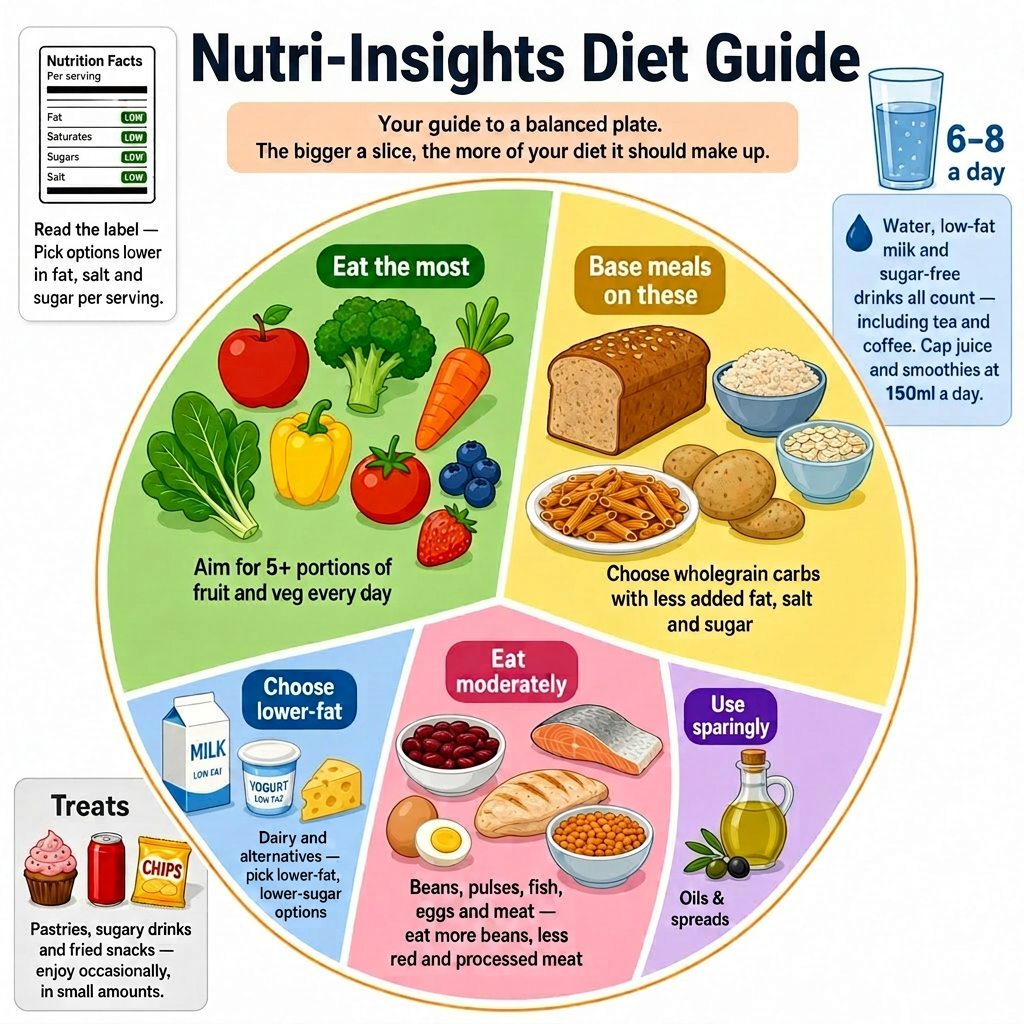
The bigger the slice, the more of your daily diet it should make up.
Aim for 5+ portions a day — fresh, frozen or tinned all count.
Wholegrain bread, rice, pasta, oats and potatoes — base your meals on these.
Beans, pulses, fish, eggs and lean meat — eat more beans, less red & processed meat.
Pick lower-fat, lower-sugar milk, yoghurt or fortified plant alternatives.
Use unsaturated oils in small amounts.
Pastries, sugary drinks and fried snacks — enjoy occasionally, in small amounts.
What you should have in your diet
🥦 Fruit & vegetables
At least 5 portions a day. Mix colours — leafy greens, berries, peppers, carrots. Fresh, frozen, tinned or dried all count.
🍞 Starchy carbs
Wholegrain bread, brown rice, pasta, oats and potatoes (with skin). Base most meals on these for steady energy.
🐟 Protein
2 portions of fish a week (1 oily, e.g. salmon). More beans, lentils and eggs; less red and processed meat.
🥛 Dairy or alternatives
Milk, yoghurt and cheese — choose lower-fat, lower-sugar options. Fortified plant alternatives work too.
🫒 Healthy fats
Small amounts of olive or rapeseed oil, nuts, seeds and avocado. Limit butter, palm oil and coconut oil.
🏷️ Read the label
Pick options lower in fat, saturates, sugar and salt per serving. Greens are best; reds mean go easy.
Example day of balanced meals
Breakfast
Porridge oats with sliced banana and a handful of berries.
Lunch
Wholegrain wrap with grilled chicken or chickpeas, salad, and a little hummus.
Dinner
Baked salmon or lentil curry with brown rice and steamed broccoli.
Snacks
Apple slices with peanut butter, plain yoghurt, or a small handful of unsalted nuts.
Hydration
Kids (4–8)
About 1 litre a day — mostly water or milk.
Teens (9–13)
About 1.3–1.7 litres a day, more on active days.
Adults
Around 6–8 glasses (1.5–2 litres). Water, milk, and sugar-free drinks count.
Cap juice and smoothies at 150ml a day. Fizzy and sugary drinks are best kept as an occasional treat.
Smart snack swaps
Sugary cereal → Porridge
Oats with fruit keep you full longer than sugary breakfast cereal.
Fizzy drink → Water or milk
Plain water or low-fat milk are kinder to teeth and steadier for energy.
Crisps → Plain popcorn or nuts
Air-popped popcorn or a small handful of unsalted nuts are crunchy without the salt and fat.
Chocolate bar → Fruit
Fresh or dried fruit gives sweetness plus fibre and vitamins.
Processed meat → Eggs or beans
Boiled eggs, lentil soup, or bean dips are protein-packed without the processing.
Pastries → Wholegrain toast
Wholegrain toast with peanut butter or avocado is a filling swap for sweet pastries.
Put this into practice
Where this guidance comes from
- NHS Eatwell Guide — proportions for a balanced diet, fruit and veg targets, and healthy swap ideas.
- USDA Dietary Guidelines for Americans — calorie ranges by age and sex, and limits on added sugars and saturated fat.
Local advice may differ slightly; follow the guidance from your own country's health authority.
General guidance only — not medical advice. For personalised dietary needs, consult a registered dietitian or your doctor.